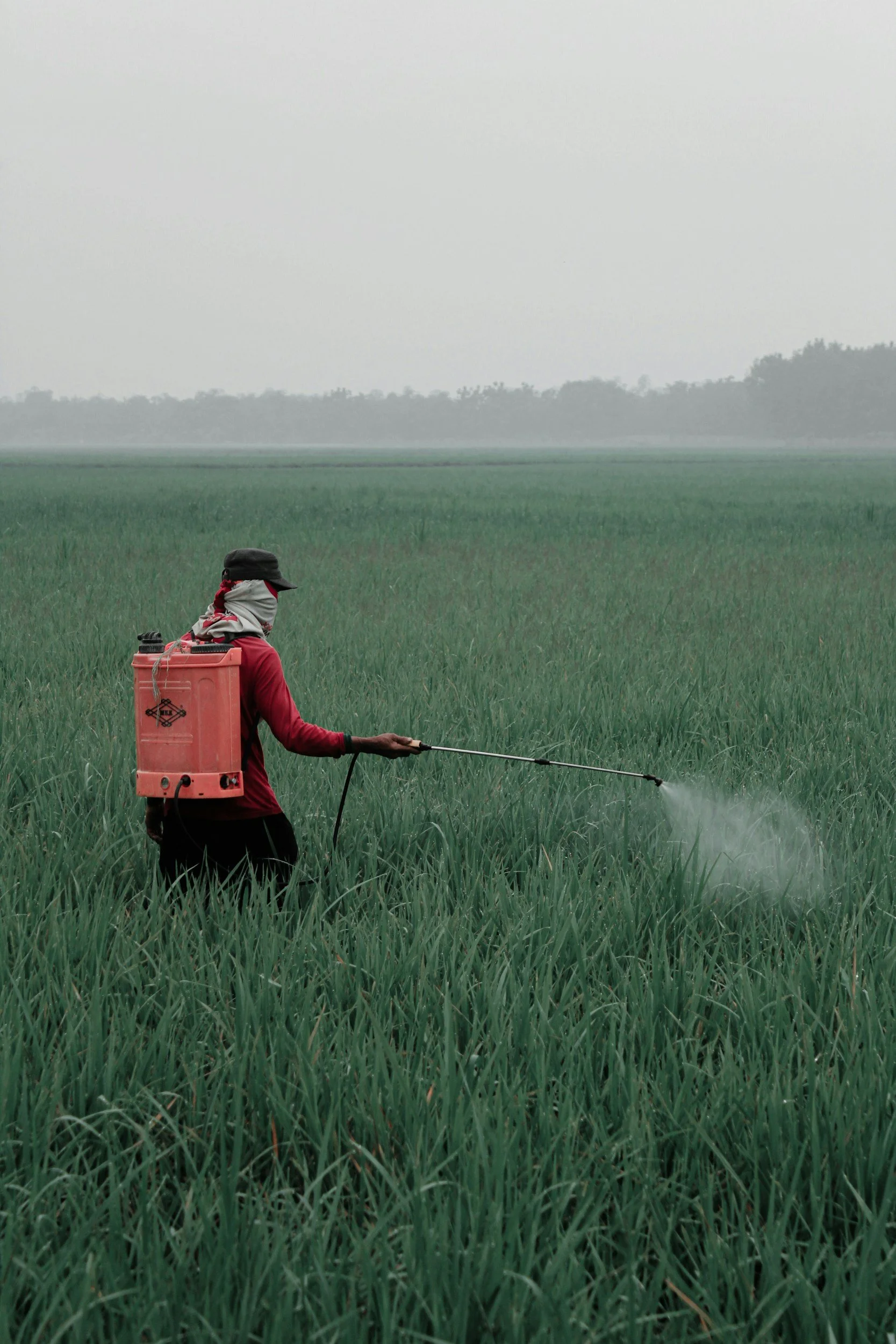
Why you might want to rethink that pesticide spray and what actually works instead
You grabbed the can under the sink, gave the corner a quick spray, and figured that was the end of it. Most of us have been there. But if you have children crawling on those floors, a dog who sleeps in that corner, or you simply spend a lot of time at home, it's worth pausing to ask: what exactly is in that spray, and where does it go once you've used it?
The research on household pesticide exposure is more concerning than the average product label suggests, and the alternatives are genuinely easier than most people expect.
What the research says about pesticide exposure at home
The word "pesticide" covers a wide category: insecticides, herbicides, fungicides, rodenticides. What they share is a mechanism of action designed to disrupt a biological system usually a nervous system in an insect. The problem is that the human nervous system is not entirely different from an insect's, particularly when we're talking about developing brains.
A 2010 study published in Pediatrics (Bouchard et al.) found that children with higher urinary levels of organophosphate pesticide metabolites a class found in many common household and agricultural sprays were significantly more likely to have a diagnosis of ADHD. This wasn't a fringe finding; it's been replicated in multiple cohort studies since. A 2019 meta-analysis in Environmental Research confirmed associations between prenatal pesticide exposure and neurodevelopmental outcomes including lower IQ scores and increased ADHD risk.
For adults, chronic low-level pesticide exposure has been associated with increased risk of Parkinson's disease, non-Hodgkin lymphoma, and hormone disruption. The International Agency for Research on Cancer (IARC) has classified several pesticide active ingredients including glyphosate as "probably carcinogenic to humans."
None of this means that a single spray will cause harm. What matters is cumulative exposure over time, and the fact that indoor pesticide residues can persist on surfaces for days to weeks after application, far longer than most people realize.
Why children and pregnancy are higher-risk situations
Children are not simply small adults when it comes to chemical exposure. Pound for pound, they breathe more air, drink more water, and eat more food relative to their body weight than adults do which means proportionally higher exposures. Their detoxification systems are still developing, and their neurological systems are in a critical window of maturation.
Pregnant women represent another high-risk group. Many pesticide compounds are lipophilic (fat-soluble), meaning they can cross the placental barrier and accumulate in fetal tissue. A systematic review in Reproductive Toxicology (2014) found associations between prenatal pesticide exposure and adverse birth outcomes including preterm birth and low birth weight.
If you are pregnant, planning a pregnancy, or have young children at home, this is the demographic where the case for reducing pesticide exposure is strongest. Even if you're not in that group, your home is an enclosed environment where residues accumulate in ways that outdoor exposures don't.
Plants that genuinely deter common household pests
One of the most practical and underused strategies is simply growing the right plants. Several herbs and ornamentals contain volatile organic compounds that insects find repellent and that humans have been using for this purpose for centuries, now with a decent body of evidence behind them.
Lavender (Lavandula angustifolia) is well-documented as a repellent for moths, fleas, and flies. The linalool content is the active compound, and it works best as a living plant or fresh dried bundles near windows and wardrobes.
Basil contains eugenol and other volatile compounds that repel flies and mosquitoes. A pot of basil on a kitchen windowsill serves double duty culinary and functional. A study in the journal Bioresource Technology (2009) found basil essential oil to be effective against common house mosquitoes.
Mint (Mentha spp.) particularly peppermint and spearmint is strongly repellent to ants, aphids, and spiders. The caveat: mint spreads aggressively if planted in the garden, so keep it in containers indoors or in pots sunk into the ground outside.
Rosemary contains camphor and other terpenes that deter many flying insects. It's drought-tolerant, easy to grow on a sunny ledge, and doubles as a kitchen herb.
Chrysanthemums contain pyrethrins naturally occurring compounds that are actually the basis for the synthetic pyrethroid class of pesticides. Ironically, the plant itself, grown in your garden or a sunny room, acts as a low-level deterrent for aphids, mites, ticks, and silverfish without the concentrated exposure risk of a spray.
Lemon balm and lemongrass both contain citronellal, the same compound found in citronella candles, and are effective deterrents for mosquitoes when grown near outdoor seating areas or open windows.
Easy, low-maintenance non-toxic pest control methods
Beyond plants, there are several practical approaches that work well for common household pests and require minimal effort to maintain.
Diatomaceous earth (food grade) is a powder made from fossilized algae. It works mechanically not chemically by damaging the exoskeletons of insects, causing them to dehydrate. It's effective against ants, cockroaches, bed bugs, and fleas. Sprinkle a thin line along baseboards, under appliances, and around entry points. It's non-toxic to mammals and can be vacuumed up and reapplied. I personally use this around the garden my pets venture into, and around the corners of the house where ants can be found.
Essential oil sprays particularly clove, peppermint, and cedarwood can be diluted in water (10–15 drops per 250 mL) and sprayed along windowsills, door frames, and countertops as a deterrent. They need more frequent reapplication than chemical sprays but carry no residue risk.
Sealing entry points is, frankly, more effective than any spray. Ants and cockroaches enter through gaps you can seal with silicone caulk. This addresses the problem at the source rather than treating symptoms.
Cedar blocks and sachets in wardrobes are an evidence-supported alternative to mothballs. Mothballs contain either naphthalene or paradichlorobenzene both classified as possible carcinogens by the US National Toxicology Program. Cedar doesn't share that risk profile.
Sticky traps for flying insects and fruit flies are non-toxic, effective for monitoring and reducing populations, and easy to place and replace.
What this could look like in practice
In my practice, I see patients particularly parents who are trying to do the right thing for their family's health but feel overwhelmed by how many things they're "supposed to" avoid. My honest advice is to start small and systematic rather than trying to overhaul everything at once.
If you have young children or you're pregnant, prioritize eliminating indoor sprays first these are the highest-exposure route. Replace them with diatomaceous earth for insects and mint or lavender plants at entry points. If you're dealing with a garden pest issue, look at companion planting with chrysanthemums and marigolds before reaching for a herbicide.
If you're a renter or don't have garden space, a few potted herbs on a windowsill and a jar of food-grade diatomaceous earth under the sink gets you most of the benefit with almost no effort.
The goal isn't perfection. It's reducing overall exposure over time, which is what the evidence actually supports.
Frequently asked questions
Are "natural" or "organic" pesticides safe to use freely? Not necessarily. Pyrethrin-based sprays, for example, are derived from chrysanthemums but are still concentrated chemical compounds with exposure risks particularly for cats, which cannot metabolize pyrethrins and can be seriously harmed. "Natural" doesn't automatically mean safe. The dose and route of exposure still matter.
What should I do if I've already been using pesticides regularly at home? There's no need to panic. The research is about chronic, cumulative exposure not single incidents. Start by switching to the alternatives described above, improve ventilation in your home, and focus on a diet rich in cruciferous vegetables and fibre, which support the liver's ability to process and eliminate environmental compounds.
Are the plants listed above safe for pets? Most are, but with exceptions. Lavender and mint are mildly toxic to cats in large ingested amounts; as repellent plants they're generally low risk, but keep pots out of reach of pets who chew plants. Chrysanthemums are mildly toxic to both cats and dogs if ingested. If you have pets, check with your veterinarian before introducing new plants.
How do I deal with a serious infestation without chemical sprays? For a serious infestation rodents, termites, or widespread cockroaches professional pest control may genuinely be necessary. In those cases, ask the company about low-toxicity or integrated pest management (IPM) approaches, which minimize chemical use. A one-time professional treatment is a different risk profile than ongoing home spraying.
Does diet play a role in how our bodies handle pesticide exposure? Yes. Adequate intake of dietary fibre, cruciferous vegetables (broccoli, cauliflower, Brussels sprouts), and foods that support liver function (beets, artichokes, adequate protein) all help the body metabolize and eliminate environmental compounds more efficiently. This isn't a substitute for reducing exposure, but it's a meaningful complement.
A note on this article: This post is for educational purposes and is not medical advice. If you have concerns about chemical exposures and their effects on your health or your child's health, please consult a qualified healthcare provider. Always discuss any significant changes with your child's healthcare provider.
Ready to look at your family's environmental health picture?
If you've been wondering how your home environment might be contributing to symptoms fatigue, skin issues, recurring headaches, or your child's behavioural concerns a naturopathic assessment can help you put the pieces together. Book a free 15-minute discovery call and let's talk about what's going on and whether working together makes sense.
About the author: Dr. Sonya Arrigo, ND is a Naturopathic Doctor practicing virtually across Ontario and in person at Insight Naturopathic Clinic in Toronto's Leaside neighbourhood. She holds an HBSc from the University of Toronto and a Doctor of Naturopathy from the Canadian College of Naturopathic Medicine, and is registered with the College of Naturopaths of Ontario.