
H. pylori treatment isn't always straightforward and how does S. boulardii fit in?
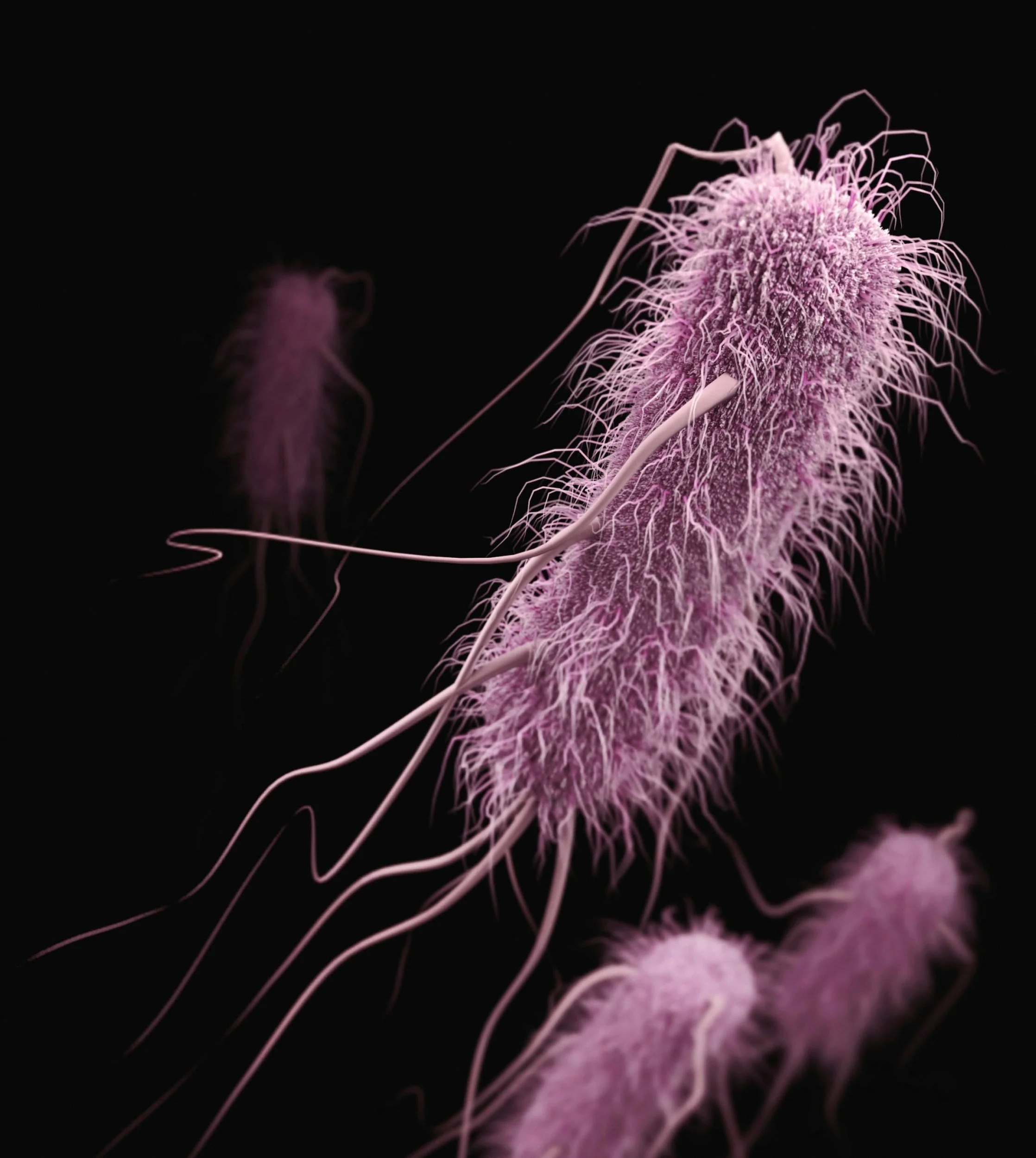
If you've been diagnosed with Helicobacter pylori, you've probably been handed a prescription for a combination of antibiotics and a proton pump inhibitor and told to take the full course. What you may not have been told is that H. pylori eradication fails in a significant number of cases often 30% or more, depending on the antibiotic resistance pattern in your region and that the treatment itself can cause enough digestive disruption to make completion difficult.
Saccharomyces boulardii (S. boulardii) is one of the better-studied and more clinically useful tools in this picture, and it works in ways that genuinely complement the standard treatment approach. This is not a case of "take a probiotic and skip the antibiotics." It's a case of understanding how these two organisms interact, what the evidence shows, and why adding S. boulardii to an H. pylori treatment protocol often improves outcomes on multiple fronts simultaneously.
What H. pylori actually is and why it's so common
Helicobacter pylori is a gram-negative bacterium that colonizes the gastric mucosa the lining of the stomach. It's estimated to be present in roughly half the global population, though rates vary significantly: higher in developing regions (60–80%) and somewhat lower in high-income countries like Canada, where prevalence is approximately 20–30% in the general population and higher in certain immigrant communities and older adults.
What makes H. pylori unusual is its ability to survive the acidic environment of the stomach, which most microorganisms cannot. It does this by producing urease, an enzyme that converts urea into ammonia, creating a locally neutralized microenvironment around itself. It then embeds itself in the gastric mucosa, triggering a chronic inflammatory response gastritis that in many people is entirely asymptomatic for years or decades.
The clinical consequences, when they develop, range from peptic ulcers to gastric cancer. H. pylori is classified as a Group 1 carcinogen by the International Agency for Research on Cancer (IARC), meaning there is sufficient evidence of its causal role in gastric adenocarcinoma. This is why eradication not just management is the goal.
H Pylori also contains Virulence factors, these are specialized tools that allow the bacteria to evade the immune system and attack the host.
Think of them as a pathogen's survival kit. They allow the microbe to:
Attach to and colonize host tissues.
Invade cells or breach protective barriers.
Evade or deactivate the body's immune defenses.
Damage host cells to steal nutrients, often leading to symptoms of illness.
The more powerful or diverse a microbe's virulence factors are, the more effective it is at causing severe disease
H Pylori’s Virulence Factors
1. Toxins (Cell Damage & Cancer Risk)
CagA (Cytotoxin-Associated Gene A): Often called a "bacterial oncoprotein." It acts like a toxic syringe, altering host cell structure, promoting severe chronic inflammation, and directly increasing the risk of gastric cancer.
VacA (Vacuolating Cytotoxin A): Punches holes in gastric cells, creating large fluid-filled spaces (vacuoles) that cause the cells to break down and die.
2. Survival Enzymes (Acid Neutralization)
Urease: The ultimate survival tool. It breaks down urea into ammonia, creating a chemical "cloud" of alkalinity around the bacterium to neutralize harsh stomach acid.
3. Adhesins (Attachment)
BabA & SabA: Specialized surface proteins that lock onto specific sugars on the stomach lining. This ensures the bacteria stay securely anchored and are not washed away by stomach churning or digestion.
What S. boulardii is and why it's different from other probiotics
Saccharomyces boulardii is a probiotic yeast, not a bacterium. This distinction matters more than it might initially seem. Because it is a yeast, it is entirely unaffected by the antibiotics used in H. pylori eradication protocols antibiotics target bacterial cell structures, and S. boulardii has none. You can take S. boulardii simultaneously with antibiotics without worrying about the antibiotic destroying the probiotic, which is the central problem with most bacterial probiotics taken during antibiotic treatment.
S. boulardii was originally isolated from lychee and mangosteen fruit in Southeast Asia in the 1920s by French microbiologist Henri Boulard, who observed that local populations consuming the fruit were resistant to cholera during outbreaks. It has since become one of the most clinically studied probiotic organisms globally, with a particularly strong evidence base in antibiotic-associated diarrhea, Clostridioides difficile infection, and gastrointestinal infections.
It works through several distinct mechanisms: it produces proteases that degrade bacterial toxins, it stimulates secretory IgA (the gut's primary antibody defence), it reinforces intestinal tight junctions to reduce mucosal permeability, and it directly competes with pathogenic organisms for mucosal attachment. In the context of H. pylori specifically, some research suggests S. boulardii produces compounds including short-chain fatty acids and caprylic acid that may directly inhibit H. pylori colonization and reduce its adhesion to the gastric mucosa.
How H. pylori and S. boulardii are biologically linked
The relationship between H. pylori and S. boulardii is best understood through what H. pylori does to the gut environment — and what S. boulardii does to correct it.
H. pylori infection doesn't stay neatly confined to the stomach. Chronic gastritis disrupts gastric acid production — initially, inflammation can cause excess acid, contributing to reflux and ulcer formation; over time, chronic H. pylori-associated gastritis can reduce acid-producing cells and lead to hypochlorhydria (low stomach acid). Low stomach acid is a significant problem because adequate gastric acid is one of the gut's primary defences against pathogenic organisms entering the small intestine. A compromised gastric acid environment allows microorganisms that would otherwise be eliminated to survive transit into the small bowel contributing to altered gut microbiome composition and, in some cases, small intestinal bacterial overgrowth (SIBO).
H. pylori also directly disrupts the intestinal mucosal barrier through its inflammatory effects. It increases intestinal permeability sometimes called "leaky gut" by activating inflammatory cytokines that degrade tight junction proteins. This is relevant well beyond the stomach: systemic inflammation, food sensitivities, and immune dysregulation can all be downstream consequences of unaddressed H. pylori infection.
S. boulardii addresses several of these mechanisms simultaneously. It has documented effects on reinforcing intestinal barrier function, reducing inflammatory cytokine signalling (particularly IL-8 and TNF-α, both of which are elevated in H. pylori infection), and stimulating secretory IgA production that helps clear the mucosal surface. It also helps restore microbial diversity disrupted both by H. pylori itself and by the antibiotic treatment used to eradicate it. In this sense, S. boulardii isn't simply a supportive add-on it's addressing mechanisms that the standard antibiotic protocol doesn't touch.
Why H. pylori eradication sometimes fails and what that means
Antibiotic resistance in H. pylori is a growing clinical problem. Clarithromycin resistance, in particular, has increased significantly in many regions, including parts of Europe and North America, and is now high enough that standard triple therapy (clarithromycin, amoxicillin, PPI) has declining efficacy in populations with high resistance prevalence. Metronidazole resistance is even more common.
When first-line eradication fails, the clinical path typically involves retreatment with a different antibiotic combination often quadruple therapy with bismuth. Each successive round of antibiotics carries greater disruption to the gut microbiome and higher risk of side effects. This is precisely why supporting eradication success on the first attempt including with S. boulardii matters.
It's also worth noting that eradication failure is not always due to antibiotic resistance alone. Poor treatment adherence (often driven by side effects), inadequate acid suppression, and unfavourable gut conditions that reduce antibiotic efficacy at the mucosal level all contribute. S. boulardii addresses the adherence and mucosal environment components.
What this could look like in practice
When I'm working with a patient who has tested positive for H. pylori whether through a urea breath test, stool antigen test, or biopsy and they're moving forward with antibiotic eradication therapy, S. boulardii is part of the conversation from the start. I typically recommend it concurrently with the antibiotic protocol, not sequentially, because its utility during treatment (reducing side effects, potentially improving eradication rates) is distinct from the role of bacterial probiotics, which are better started after the antibiotic course is complete.
Post-eradication, the work doesn't end at a negative test. The gut environment after H. pylori infection and a course of antibiotics needs support restoring microbial diversity, addressing any residual mucosal inflammation, and investigating downstream effects like hypochlorhydria, nutrient malabsorption (H. pylori significantly impairs iron, B12, and vitamin C absorption), and any SIBO that may have developed in the context of altered gastric function.
This is also why I investigate for H. pylori in patients presenting with iron deficiency anaemia that doesn't respond to supplementation, unexplained B12 deficiency, chronic bloating, or persistent upper GI symptoms even when a primary care visit has attributed the symptoms to stress or diet. H. pylori is underdiagnosed, and its downstream effects on nutrient absorption and gut architecture mean it can present in ways that don't obviously point to the stomach.
Frequently asked questions
Can I take S. boulardii at the same time as my H. pylori antibiotics? Yes and this is one of its key advantages over bacterial probiotics. Because S. boulardii is a yeast, it is not affected by antibiotics. You can take it simultaneously with your eradication protocol without reducing its effectiveness. Standard guidance is to take it at a time of day separate from your probiotic dose (e.g., antibiotic with breakfast, S. boulardii at dinner), though concurrent dosing is not contraindicated.
What if my doctor says H. pylori eradication doesn't need probiotic support? Your doctor isn't wrong that the antibiotic protocol is the primary treatment, and S. boulardii isn't a replacement for it. The evidence for S. boulardii is best understood as complementary improving tolerability and potentially improving the success rate of the treatment your doctor has prescribed. If you're experiencing significant side effects or have had a previous eradication failure, it's a reasonable conversation to have with your prescribing physician.
How do I know if I have H. pylori? The most accessible tests are the urea breath test and the stool antigen test, both of which are non-invasive and fairly sensitive. Blood antibody testing is less reliable for active infection. Endoscopy with biopsy is the most definitive but is typically reserved for patients with alarm symptoms (unexplained weight loss, difficulty swallowing, significant blood in stool). Testing can be ordered through your family doctor or, in many cases, through a naturopathic doctor.
Can H. pylori come back after treatment? Re-infection is possible but relatively uncommon in high-income countries with good sanitation infrastructure. Re-infection rates in North America are estimated at 1–3% per year. A confirmed eradication (positive test followed by a negative test at least four weeks after completing treatment) is generally durable. Recurrence of symptoms without re-infection can occur if there are other contributing factors gut microbiome disruption, hypochlorhydria, or SIBO — that developed in the context of the original infection.
Does S. boulardii have any side effects? S. boulardii is generally very well-tolerated. Mild bloating or gas can occur initially, particularly in people with significant gut dysbiosis. It is contraindicated in immunocompromised individuals and those with central venous catheters (there are rare reported cases of fungaemia in critically ill patients), but in healthy outpatient populations, the safety record is excellent. If you are significantly immunocompromised, discuss with your healthcare provider before starting.
A note on this article: This post is for educational purposes and is not medical advice. H. pylori diagnosis and treatment should be managed by a qualified healthcare provider. If you are currently on H. pylori eradication therapy, speak with your prescribing physician before adding any supplements to your protocol.
Questions about your gut health picture?
If you've been diagnosed with H. pylori, have had a previous eradication attempt that didn't work, or are dealing with persistent digestive symptoms that haven't been fully explained, a naturopathic assessment can help you understand the fuller picture. Book a free 15-minute discovery call and let's talk about what's going on and whether working together makes sense.
